
Hunting / Skills
Date: April 12th, 2026
Most people think hunting season starts in the fall. They’re wrong. Hunting season starts right now.
The snow is melting, the woods are waking up, and the animals are moving from their winter ranges. This is your window of opportunity. Spring scouting is not about hunting; it’s about intelligence gathering. It’s about learning the terrain, identifying bedding areas, and understanding travel corridors before the pressure is on.
The mission is simple: get in, get data, and get out without leaving a trace. To do that, your gear priorities need to shift from lethality to mobility and observation. Here is your spring loadout checklist.
Use our special 30% off Code for extra savings: SpringPrep30
1. Optics are Your Best Weapon
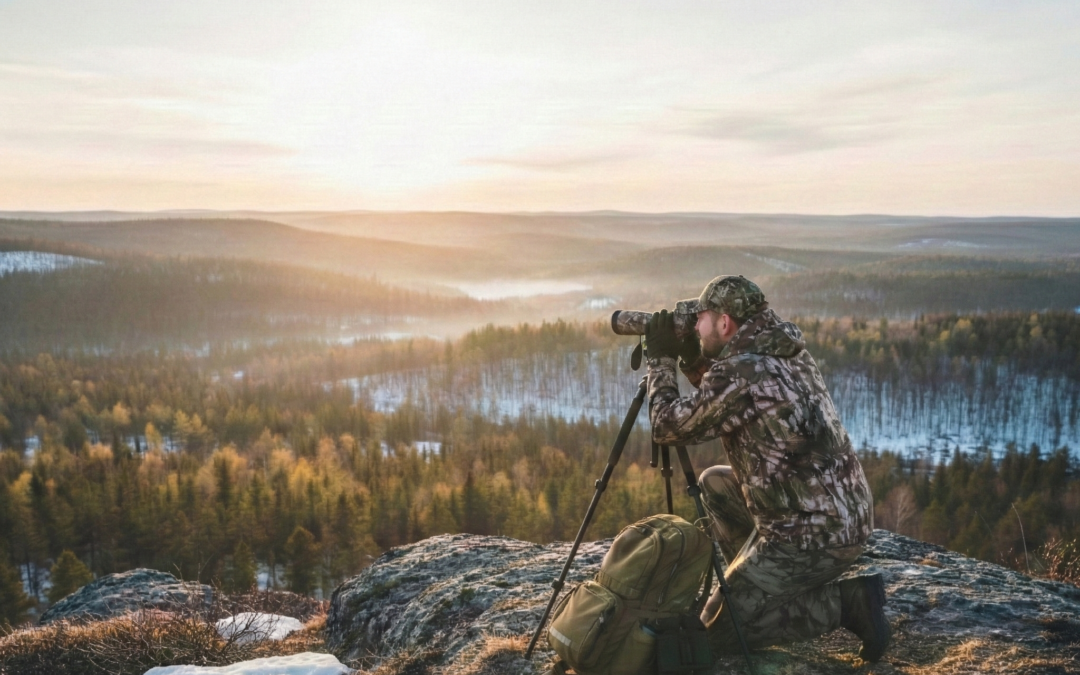
In the spring, you want to see the animals, but you don’t want them to see you. You need to scout from a distance.
-
The Priority: High-quality binoculars are non-negotiable for scanning hillsides and treelines. For a closer look without closing the distance, a spotting scope is essential.
-
The Pro Tip: Don’t try to freehand it. A lightweight, stable tripod will revolutionize your glassing game, allowing you to pick apart the landscape for hours without fatigue or shake.
2. Footwear for the Thaw
Spring terrain is a sloppy, unpredictable mess of mud, snow, and swollen creeks. Your late-season insulated boots are too hot and heavy.
-
The Priority: A dedicated pair of uninsulated, waterproof hunting boots with an aggressive tread. Rubber boots are also a great option for keeping your scent down in wet areas.
-
The Layering System: The weather turns on a dime. Pack a versatile layering system—a moisture-wicking base layer, a mid-layer for warmth, and a packable rain shell—so you can regulate your temperature as you hike.
3. Navigation & Mapping
You can’t track patterns if you don’t know where you are.
-
The Priority: Use a GPS or a phone app like onX Hunt to mark everything: rubs, wallows, game trails, water sources, and potential stand locations.
-
The Fail-Safe: Electronics die. Always carry a physical topographic map of your area and a compass as a backup. Knowing how to read the land is a skill that never runs out of battery.
4. Trail Cameras: Your 24/7 Scout
You can’t be everywhere at once.
-
The Priority: Deploy trail cameras over pinch points, mineral sites (where legal), and water sources. They are your eyes in the woods when you’re at work, providing crucial data on animal inventory and time-of-day movement.