The “Ten Essentials” Reboot: What’s Actually in Your Day Pack?
Category: Hiking / Skills Date: February 7th, 2026
We’ve all heard of the “Ten Essentials.” It’s the golden rule of hiking that dates back to the 1930s. But gear has changed, and so have the trails.
While the concept of preparedness never goes out of style, the way we pack has evolved. You don’t need to carry a heavy, bulky rucksack to be safe. You just need smarter gear.
Whether you are hitting a local trail in Coquitlam or trekking deep into the backcountry, here is the rebooted list of what actually belongs in your Day Pack in 2026.
1. Navigation (The Analog Backup)
Yes, we all use our phones or GPS watches. But batteries die and screens crack.
-
The Upgrade: Keep your tech, but always carry a physical topographic map and a Compass.
-
Pro Tip: Download offline maps on your phone, but keep a Power Bank in a waterproof bag as your fail-safe.
2. Illumination (Hands-Free is Key)
Getting caught on the trail after sunset happens faster than you think. If you are using your phone flashlight, you are draining your battery and losing your balance.
-
The Upgrade: A lightweight Headlamp is non-negotiable. Modern LEDs are lighter and brighter than ever. Always pack one, even for a morning hike.
3. Sun Protection
Sunburn is the quickest way to ruin a multi-day trip.
-
The Upgrade: It’s not just sunscreen. It’s polarized sunglasses to reduce glare off water or snow, and a brimmed hat.
4. First Aid (Blister Management)
You likely won’t need a tourniquet on a day hike (though it’s good to have), but you will eventually need blister care.
-
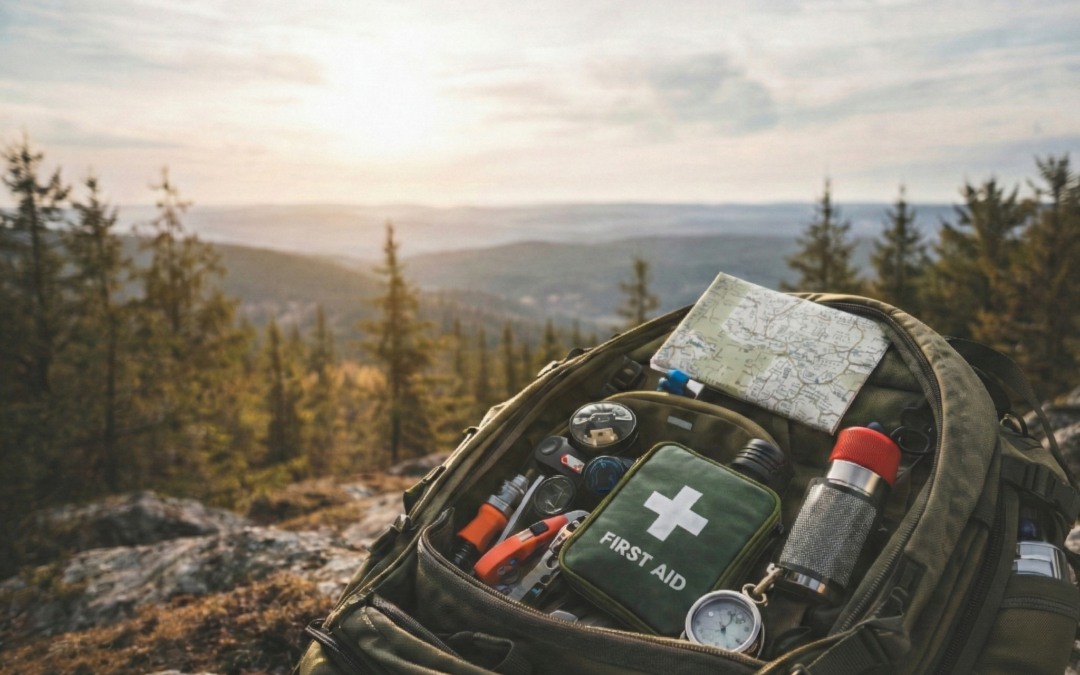
The Upgrade: Customize your First Aid Kit. Add extra moleskin, leukotape, and ibuprofen. These are the things you’ll actually use.
5. Knife & Repair Kit
Gear fails. Straps break.
-
The Upgrade: You don’t need a massive survival knife. A solid Multi-tool with pliers and a blade, plus a small roll of duct tape wrapped around a trekking pole, can fix almost anything.
6. Fire
For emergency warmth or signaling.
-
The Upgrade: A waterproof lighter is easier than matches. Throw in a few cotton balls soaked in petroleum jelly (stored in a film canister or small bag) for an instant fire starter that burns wet.
7. Shelter (The “Just In Case”)
If you twist an ankle and have to wait overnight for rescue, you need to stay dry.
-
The Upgrade: An ultra-light Emergency Bivy space blankets and sleeping bag covers. They weigh mere ounces and live at the bottom of your pack until you need them.
8. Extra Food
Hiker hunger is real.
-
The Upgrade: Pack dense calories. Energy bars, nuts, or jerky. Bring one day’s worth of extra food—just in case that 4-hour hike turns into an 8-hour ordeal.
9. Extra Water
Dehydration causes fatigue and poor decision-making.
-
The Upgrade: Carry a Hydration Bladder for easy drinking on the move, but carry a backup Filtration Straw or purification tablets so you can refill from a stream if you run out.
10. Extra Clothes (Layers)
Weather in the mountains changes in minutes.
-
The Upgrade: Avoid cotton. Pack a lightweight Rain Shell or a Merino Wool Layer and Socks that keeps you warm even if it gets wet.
The “11th Essential”: Common Sense
The most important tool doesn’t go in your pack; it stays in your head. Tell someone where you are going and when you’ll be back.
Ready to update your load-out? Check out our Shop to find the lightweight, durable gear that makes packing the Ten Essentials easier than ever.